
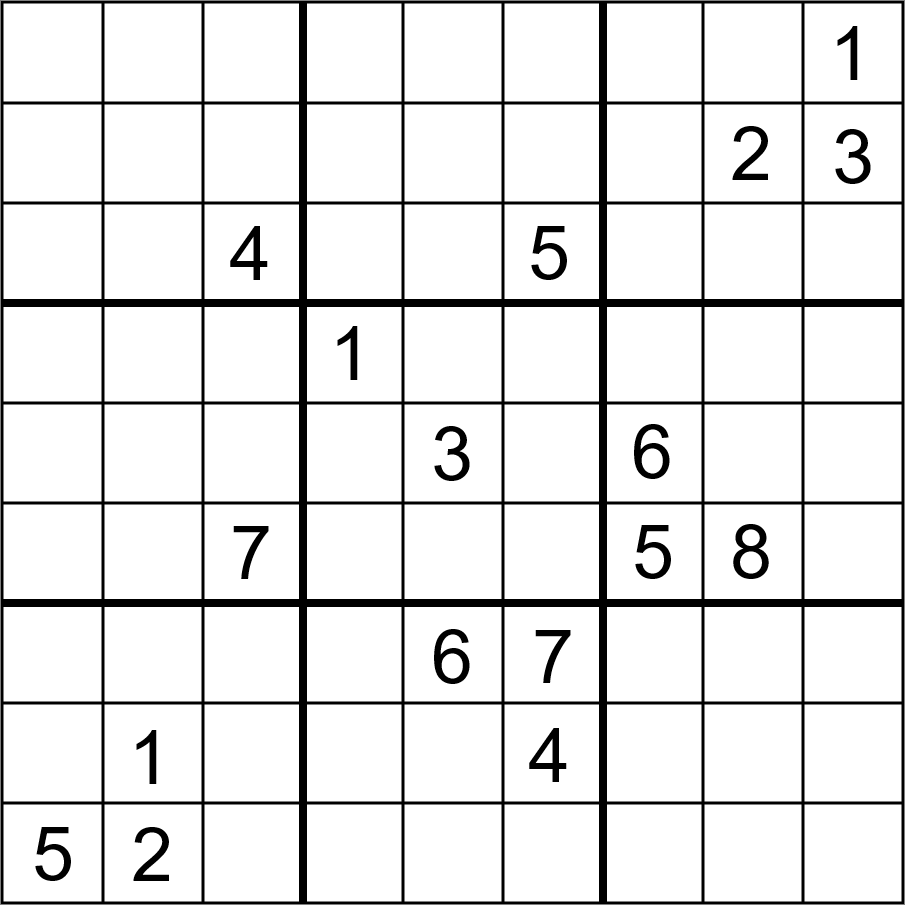
Sudoku Nyt can look casual until a player starts watching the clock. The newspaper-style identity adds a useful sense of occasion: one board, one sitting, and a clean result at the end. Competition does not have to mean a giant stadium or a prize table. It can be a clean time, a better score, a longer streak, or the simple challenge of making fewer weak moves than yesterday. That is the useful side of competitive puzzle play: it turns attention into something a player can measure without losing the calm that made the game appealing.
Sudoku Nyt in practice
What a fast Sudoku solver sees first
A timed solver does not begin by hunting for the most interesting-looking square. The first pass is wider and calmer. They look for rows with very few gaps, boxes with a tight set of candidates, and digits that appear in only one place inside a unit. The point is to build a map of the board before making the first serious commitment. That map prevents the clock from turning every uncertain move into a guess.
The same approach works for an ordinary daily board. Give yourself a short opening scan, then mark one or two areas where the constraints are strongest. If nothing is clear, move on. A fast solver is not staring harder; they are abandoning low-information positions sooner. That habit makes speed a side effect of better selection rather than a frantic goal.
Competition rewards clean information
Sudoku events organized through the World Puzzle Federation show why accuracy and speed cannot be separated. A wrong entry is not merely one lost square. It can send later scans in the wrong direction and force a solver to spend valuable time repairing a branch. Strong competitors therefore protect the quality of their notes. They keep candidates light, confirm placements, and avoid filling a square just because it feels likely.
You can borrow that discipline without entering a tournament. Use a consistent scan order, pause after every confirmed number, and treat a contradiction as useful feedback instead of a personal failure. If a row suddenly has no legal place for a digit, the right response is to inspect the last assumption, not to add more guesses.
Make the next board measurable
A good personal benchmark is not only completion time. Track how often you need to erase a guess, how early you notice a hidden single, or whether your first scan leaves a useful plan. Those measures are kinder and more informative than racing an expert time. Play a new grid on the main site and find related Sudoku posts here. For formal competition context, the World Puzzle Federation provides a better reference than an unverified leaderboard claim.
A fair challenge for an ordinary session
Before the next board, decide what counts as evidence. A single candidate left in a unit is evidence. A number that merely feels comfortable is not. This small distinction keeps the solve honest and makes a later review possible. When a puzzle goes wrong, you can return to the first unsupported choice instead of blaming the entire board.
Give the opening a fixed amount of time. Scan the rows, columns, and boxes once, then begin with the area that has the fewest legal options. If the scan produces nothing, that is useful information too. It tells you to switch from direct placements to candidate notes rather than forcing a move. The board is not asking for speed yet; it is asking for a better question.
After every confirmed digit, revisit only the units it touches. This keeps the work light and prevents the common habit of restarting the whole scan after every move. Small loops are easier to maintain than a dramatic full-board search, especially on a phone where visual fatigue arrives quickly.
When you finish, write down one observation instead of only the time: a box you missed, a note you forgot to erase, or a moment when waiting helped. Then try another daily puzzle on Easy Daily Puzzle or search this site for more sudoku guides. A useful routine grows from those small observations.
The small detail worth remembering
A puzzle session becomes more satisfying when the player can explain one decision afterward. It might be a hidden single, a careful box scan, or simply the moment they chose not to guess. Explanation turns a completed board into practice that carries forward.
That is the durable appeal of a clean grid. The rules stay fixed, but the player’s attention keeps getting more precise. A few quiet sessions are enough to make the next board feel less like a wall and more like a conversation with evidence.
If the board feels difficult, lower the speed before lowering the standard. A slower scan with honest notes usually teaches more than a quick guess followed by a long repair.
For a little more context, read Nikoli’s Sudoku background and TIME on Wayne Gould and Sudoku’s spread. These references are useful for checking the basic history or rules without turning a daily game post into a long reference list.