
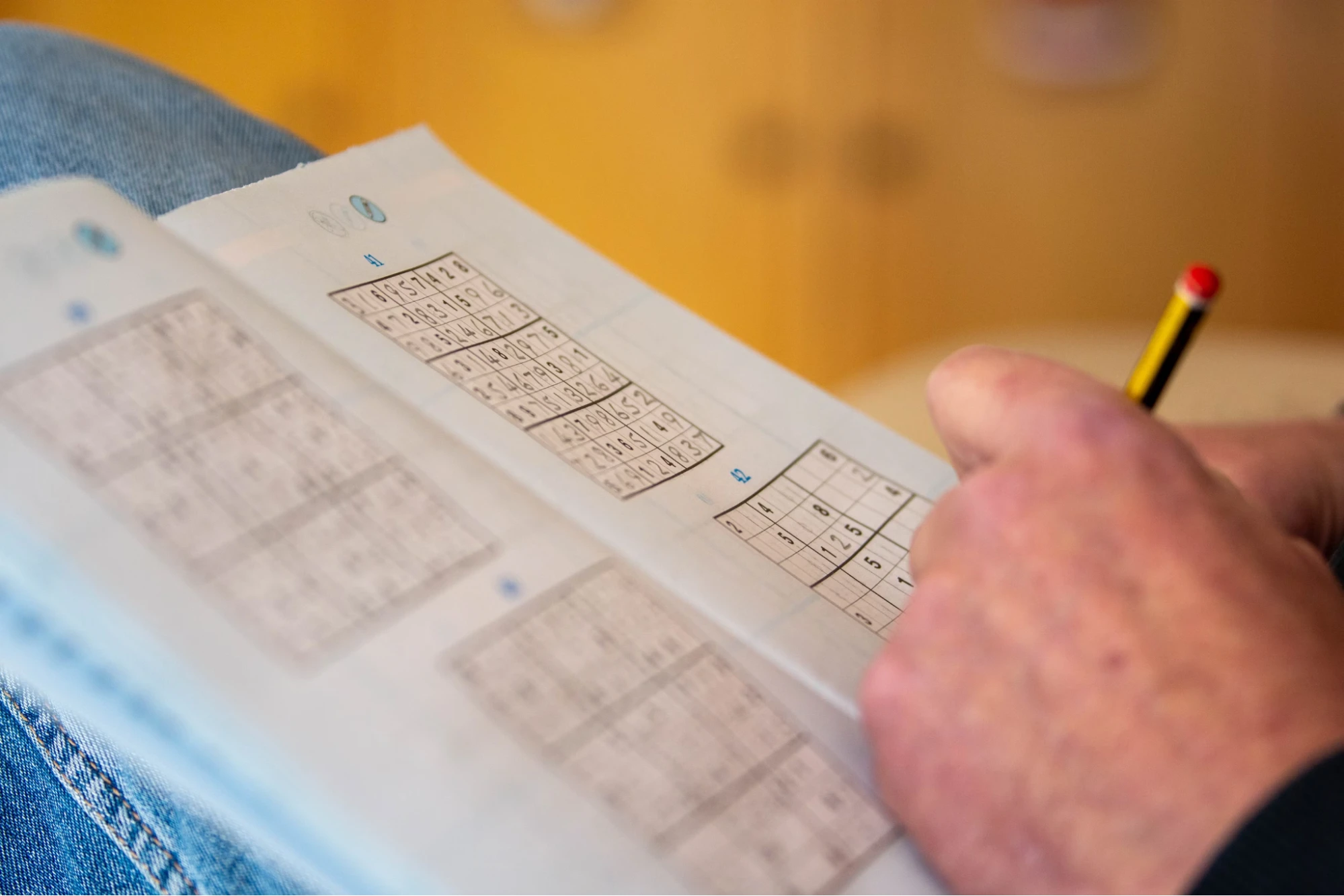
The puzzles associated with Ny times sudoku are a major challenge for good players. Unlike the simple challenges that the grid squares are ready, the more complex games are limited before filling. This makes it difficult to recognize the right position and often requires that the player have a higher understanding of certain techniques of the deceased.
In this article, we will consider the principal techniques of the school that have made it easy for you to deal with intermediate puzzles.

Engineering Monitor
Sudoku ny times‘s overall goal is very simple – you want to fill each net element with the number 1-9 without repeating.
To solve this in intermediate puzzles with limited squares required advanced techniques to ensure that you could easily handle even the smallest net at speed and accuracy. There are a number of techniques to consider, and you should apply as much as you can to every medium game you play.
The screen has been closedName
The pencil mark is an important strategy for all levels, and its importance only increases on the intermediate table.
Making the lead sign means writing down each potential number candidate for an empty square in the top corner of that square. At a simple level, this can help you visualize the panel and the obvious patterns.
While they serve widely the same purpose, advanced pencil marking strategies have more complex patterns. Consequently, many of the players associated with the player used techniques to simplify the process of marking pencils, such as ranking candidates to narrow the right number.
Recognize the Complicated Examples
Simple models such as singles can help new people start writing first numbers on their network, but singles are barely existing on small intermediate networks. In this case, players will need to recognize more complex models to start solving puzzles, as –
- Single rectangular shape: The separate rectangular shape (UR) is two four-cell groups that occupy exactly two rows, two columns and two boxes, and each group has two candidates in the dispute.
- Corner template: The corners are four squares solved into the corner of a box.
- Port types: The gate types exist when there are two cells in the same row or column, but a third hollow.
Such patterns can be useful to address different elements in your puzzle and narrow the candidates in some cases.
Use XY-Wing and XYZ-Wing
XY-wing is a group of three cells with only two candidates per cell. One of the two cells must share one unit with the other two cells, and they become ‘wings.’ Each wing must also share a candidate with the first cell but with different values. These models are hard to find, but if the second candidate in the wings is the same, and both share the same unit with a general candidate in a fourth cell, then you can eliminate that candidate.
XYZ-wing is an extension of this technique and is interested in three cells containing only three different numbers between them but fall out of a network factor. One of these cells is ‘ honey beer, ’ so the other two can be seen as having the same number, while ‘ the grog has three figures. ’ Later, one of these cells must contain a common number, and thus the ‘ sign ’ cannot have that number as real.
Applying Bonds
The sequence setting is usually much easier to understand than the Sudoku intermediary, but they may take time to solve.
A chain which includes the cells with two candidates and the aim to remove one use two strings with simple ON-OFF results.
If these two chains meet in a cell with the same candidate ‘ This candidate must be the solution to the cell. If two chains meet in a cell with the same candidate ‘ OFF, ’ the candidate cannot be the solution.
Similarly, you can attack the entire cell by finding two digits ON or off. If there are three candidates in the entire cell, then the last candidate is the solution if it’s turned off. If so, you know that one of two cells ON is the solution, and one can be eliminated.
Organisation
Sweeping a Sudoku network is the key to mapping any given number. At a simple level, this may include scanning in one direction through a row or column, but the intermediate player may prefer two-dimensional sweeps that include sweeping in two directions at the same time, such as square rows or columns to identify the templates and positions.
Counsel to solve puzzles
Simply understanding the intermediate techniques may not help you solve the intermediate puzzles in Suman. After all, the strategies discussed here may feel like a difference compared to your newly started games. Fortunately, the specifics of the intermediate puzzles are not all that are different from the leading instructions for the new starter. The difference is how you apply the advice that may include —
- Select the correct starting point: It is more difficult than ever to find a starting point on a intermediate puzzle, but use familiar techniques such as singles and couples to start filling out clear numbers and attention to candidates.
- Scan options: Once you have a few options, both bilateral scans are the key to determining complex patterns that help you succeed.
- Spend 5 minutes per advanced strategy: Advanced strategy like XY-wing can be great, but it’s hard to find. Try to devote less than five minutes to each technique, and other intermediate techniques to filling as many spaces as possible.
Training for Progress
Even if the advice in this article seems faint to you right now, practice to achieve perfection, and you will more fully apply these intermediate techniques. The online game is the best exercise method to help you improve when you can approach them, easily re-start your game, and often enjoy the technical experiment we’ve been discussing. The chances of gaining daily leadership can also be large motivation.
So, why not try your intermediate skills today at 24h24 at Sudoku?